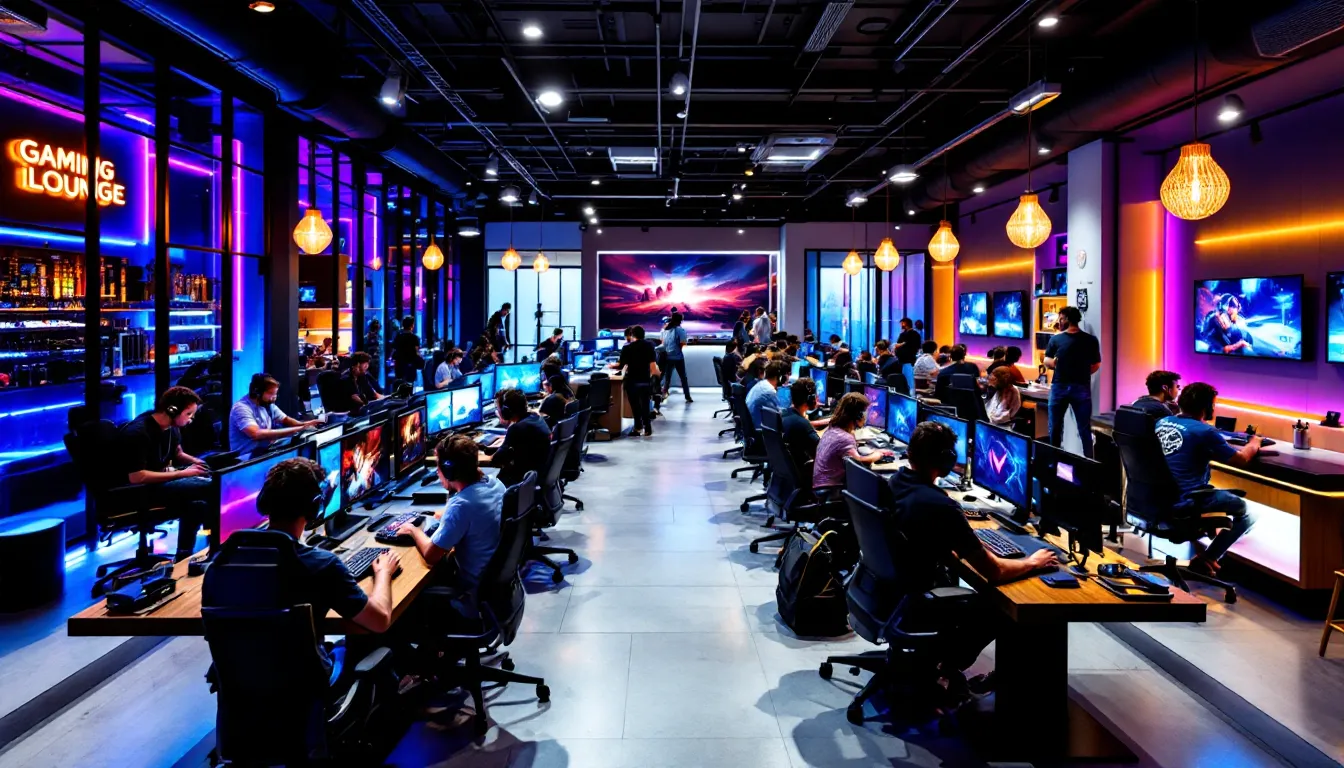

New York City’s gaming scene has evolved far beyond home setups and late-night Discord calls. In 2026, the city hosts a thriving network of gaming cafes where high-end hardware, competitive tournaments, and social gaming collide in physical spaces built for players. Whether you’re a console veteran looking to test a 240Hz display, a PC gamer chasing sub-10ms response times, or someone who just wants to squad up in person for once, NYC’s gaming lounges deliver setups most home rigs can’t match.
These aren’t your childhood arcades. Modern gaming cafes pack RTX 4090-equipped PCs, PlayStation 5 and Xbox Series X stations, VR zones, and even soundproof private rooms for scrims or LAN parties. They’re also community hubs where local esports teams practice, tournaments run weekly, and you can actually meet the people behind the gamertags. From Manhattan’s polished premium lounges to Brooklyn’s cozy indie spots and Queens’ budget-friendly grind zones, there’s a spot for every type of player, and every wallet.
This guide breaks down what makes NYC a gaming cafe hotspot, which venues are worth your time and money, what gear you’ll actually find on-site, and how to make the most of your first visit. If you’ve been curious about the scene or just need a better setup than your apartment can handle, here’s everything you need to know.
Key Takeaways
- NYC gaming cafes offer high-end hardware like RTX 4090 GPUs and 240Hz monitors at $6–$18 per hour, eliminating the $4,000+ investment needed for a personal setup.
- Gaming cafes in NYC provide dedicated community spaces where players build friendships, join tournaments with cash prizes, and connect with the local esports scene face-to-face.
- A gaming cafe in Manhattan, Brooklyn, or Queens suits every budget and playstyle—from premium competitive venues with private rooms to affordable grinder spots in outer boroughs.
- Most NYC gaming lounges include food service, private room rentals for parties, and free or discounted first-time visits, making them accessible for casual and hardcore gamers alike.
- Weekly tournaments, esports leagues, and viewing parties for major events at gaming cafes create opportunities to meet players of all skill levels and improve competitively.
What Is a Gaming Cafe and Why NYC Is a Hotspot for Gamers
A gaming cafe is a venue where players pay by the hour (or via membership) to access high-performance gaming hardware, from cutting-edge PCs to current-gen consoles and VR rigs. Think of it as a hybrid between a traditional internet cafe and a modern esports arena. You show up, pick your station, log into your accounts, and game on equipment that costs thousands, without the upfront investment or space requirements.
NYC became a natural hub for gaming cafes because of population density, expensive real estate (making home gaming setups tougher to maintain), and a massive, diverse gaming community. The city’s esports scene exploded over the last five years, with multiple pro teams, collegiate leagues, and grassroots tournaments all needing practice and competition spaces. Gaming cafes filled that gap, offering not just hardware but also low-latency internet, LAN connectivity for scrims, and event hosting capabilities.
Another key factor: social gaming. NYC gamers crave in-person play in a city where apartments are small and noise complaints are real. Gaming cafes let you run a full 5-stack in Valorant, host a Smash Ultimate bracket, or grind Elden Ring on a curved ultrawide without your roommate yelling at you. The café model also attracts international players, tourists, and business travelers who need a temporary gaming fix without lugging a rig through TSA.
By 2026, the city hosts over 30 dedicated gaming cafes, spanning budget-friendly hourly spots to premium membership clubs. Some specialize in PC esports titles, others focus on console fighters and party games, and a growing number offer hybrid VR experiences. The variety means you’re never more than a subway ride from a solid setup.
The Top Gaming Cafes in New York City
Manhattan Gaming Lounges: Premium Setups and Central Locations
Manhattan’s gaming cafes lean premium, targeting players who want top-tier hardware and are willing to pay for location and polish. Localhost Arena in Midtown remains the flagship: 50+ stations with Intel i9-13900K / RTX 4080 builds, 360Hz monitors, and Herman Miller chairs. They run a tiered pricing model, $12/hour for standard play, $18/hour for VIP booths with 4K displays. Localhost also hosts weekly League of Legends and CS2 tournaments with cash prizes, and their private rooms (up to 10 people) are popular for team practice.
Waypoint Gaming Lounge near Union Square offers a more boutique vibe: 25 stations, slightly older hardware (RTX 4070 Ti setups), but better ambiance with soundproofed pods and a full espresso bar. Membership here runs $150/month for unlimited play, which pays off if you’re logging 15+ hours. Waypoint is also one of the few Manhattan spots with a dedicated fighting game corner, eight setups running Street Fighter 6, Tekken 8, and Guilty Gear Strive on low-lag monitors with Hitbox and arcade stick support.
For console players, Reactor Gaming Hub in Chelsea focuses on PlayStation 5 and Xbox Series X stations. They stock 20 consoles with 120Hz TVs, DualSense Edge and Xbox Elite controllers, and a strong library of exclusives. Reactor is especially popular for Call of Duty and Apex Legends grind sessions, and their weekend LAN events regularly pull 30+ players.
Brooklyn’s Hidden Gems for PC and Console Gaming
Brooklyn’s scene is scrappier but community-driven. 8-Bit Dungeon in Williamsburg is a cult favorite: smaller space (15 PCs, 6 consoles), but they prioritize local multiplayer and indie titles alongside competitive games. Hardware is mid-range, RTX 4060 Ti builds, 144Hz monitors, but it’s well-maintained and the hourly rate ($8) is among the city’s lowest. They host monthly Smash Bros brackets and speedrunning meetups.
Frame Perfect Cafe in Park Slope targets the fighting game community specifically. Ten arcade-style setups with CRT and low-lag displays, every major fighter pre-loaded, and weekly locals for SF6 and Tekken. They also run a side room with five gaming PCs for variety, but the real draw is the FGC atmosphere, bracket nights feel like home tournaments.
Nexus Gaming Brooklyn in Bushwick is the borough’s biggest facility: 40 gaming PCs, 12 PS5s, and a VR zone with Meta Quest 3 headsets. Hardware is solid, Ryzen 7 7800X3D and RTX 4070 builds, and they offer both hourly ($10) and day passes ($40). Nexus doubles as a content creation space, with streaming booths for rent and green-screen setups.
Queens and Beyond: Affordable Gaming Cafes Worth the Trip
Queens offers the best value in NYC’s gaming cafe scene. Pixel Palace in Flushing is a go-to for budget-conscious grinders: $6/hour, RTX 4060-based PCs, and a no-frills setup that still delivers 1080p high-refresh gaming. It’s popular with college students and the local Asian gaming community, and weekend nights can get packed, reserve ahead if possible.
GameZone Astoria balances affordability with quality. Thirty stations with Ryzen 5 7600X / RTX 4070 builds, 165Hz monitors, and a solid snack bar. Pricing sits at $9/hour or $35 for a five-hour block. GameZone runs Valorant leagues and weekly Overwatch 2 scrims, and their private party rooms (up to eight people) are $80 for three hours, a steal compared to Manhattan.
Out in the Bronx, Respawn Gaming Lounge is newer (opened late 2025) but already building a rep. Twenty PCs with RTX 4070 Ti builds, ten console stations, and a focus on community events. They partner with local high schools and colleges for esports clubs and host all-ages tournaments. Hourly rate is $7, and first-timers get an hour free with sign-up.
What to Expect: Gaming Equipment and Hardware at NYC Cafes
PC Gaming Setups: Specs, Peripherals, and Performance
Most mid-to-premium NYC gaming cafes run current-gen hardware. Expect Intel i7-13700K or Ryzen 7 7800X3D CPUs paired with RTX 4070 to RTX 4080 GPUs. Top-tier venues (Localhost, Nexus) push RTX 4090 builds for their VIP stations. RAM is typically 32GB DDR5, with NVMe SSDs for fast game loading. These specs handle 1440p high-refresh or 4K gaming without breaking a sweat.
Monitor quality varies but trends upward. Budget cafes offer 1080p 144Hz IPS panels, which is fine for most competitive play. Mid-range spots provide 1440p 165Hz or 180Hz displays, and premium lounges stock 1080p 360Hz or 1440p 240Hz monitors for esports titles. A handful of venues offer curved ultrawides (34″ or 49″) for immersive single-player or sim racing.
Peripherals are where cafes differentiate themselves. Expect mechanical keyboards (typically Cherry MX or equivalent switches) and gaming mice from Logitech, Razer, or SteelSeries. Higher-end venues provide multiple mouse options so you can match your home setup’s weight and DPI. Headsets are usually wired, often HyperX Cloud or SteelSeries Arctis models, with good mic quality for voice comms.
Internet is a critical factor. Reputable cafes run gigabit fiber with sub-10ms ping to East Coast servers. Localhost and Waypoint advertise 5ms average ping to Riot Games servers, which matters for competitive League and Valorant play. Budget venues might hit 15-20ms, still playable but less consistent during peak hours.
All cafes let you log into your own Steam, Epic, Battle.net, Xbox, or PlayStation accounts. Game libraries are pre-installed (usually 100+ titles), but you can download your personal library if the cafe allows it and you’re willing to wait. Save files sync via cloud, so progression carries over.
Console Gaming Stations and VR Experiences
Console setups typically feature PlayStation 5 and Xbox Series X with 55″ to 65″ 120Hz TVs or monitors. Controllers are standard DualSense and Xbox Wireless, though some cafes stock premium options like the DualSense Edge or Xbox Elite Series 2 for a small upcharge ($2-3/hour). Game libraries lean toward multiplayer staples, Call of Duty, FIFA, NBA 2K, Apex Legends, but also include exclusives like Spider-Man 2, God of War Ragnarök, and Halo Infinite.
Fighting game setups deserve special mention. FGC-focused cafes use low-input-lag monitors (often 1ms response time) and support arcade sticks, Hitboxes, and fight pads. Players can bring their own controllers: most venues have USB adapters for legacy hardware.
VR is growing but still niche. Cafes with VR zones typically run Meta Quest 3 headsets (standalone or PC-tethered) or PlayStation VR2 setups. Experiences range from competitive titles like Pavlov VR and Beat Saber to social VR spaces. Hourly rates for VR run $15-20, reflecting equipment cost and shorter session times (VR fatigue is real). Nexus Gaming Brooklyn and Reactor Gaming Hub have the most robust VR offerings in the city as of early 2026.
Pricing and Membership Options: How Much Does It Cost?
Hourly rates in NYC gaming cafes range from $6 to $18 per hour, depending on location, hardware, and amenities. Budget spots in Queens and the Bronx hover around $6-8/hour. Mid-tier Brooklyn and outer-borough cafes charge $8-12/hour. Manhattan premium lounges run $12-18/hour, with VIP stations or private booths commanding the higher end.
Many cafes offer time blocks that discount bulk hours:
- 3-hour block: Typically 10-15% off hourly rate
- 5-hour block: 15-20% off
- All-day pass: $35-50, depending on venue (usually 8-10 hours of play)
Memberships are a better deal for regulars. Monthly unlimited plans range from $100 to $200. Waypoint Gaming Lounge’s $150/month plan includes unlimited play, 20% off food and drink, and priority tournament registration. Localhost Arena offers a $180/month tier with VIP station access and free private room hours. Budget cafes like Pixel Palace run $100/month unlimited plans, though peak-hour reservations may still require a fee.
Some venues use pay-per-minute or credits systems. Reactor Gaming Hub sells credit packs, $50 for 500 credits, where one credit equals one minute. This lets you pay only for exact time used, but it’s less cost-effective than buying blocks upfront.
Additional costs to budget for:
- Controller rentals (premium models): $2-3/hour
- Private room rental: $50-120 for 2-3 hours, depending on capacity
- VR sessions: $15-20/hour
- Tournament entry fees: $5-20, depending on prize pool
First-time visitors often get promotional deals: free first hour, discounted day pass, or sign-up credits. Respawn Gaming Lounge and Nexus Gaming Brooklyn both offer free first-hour trials as of March 2026. It’s worth checking a cafe’s social media or calling ahead to ask about new-user promos.
Gaming Cafe Amenities Beyond the Screen
Food, Drinks, and Snacks to Fuel Your Gaming Sessions
Most NYC gaming cafes have evolved beyond vending machines. Mid-tier and premium venues now feature in-house kitchens or partner with local food vendors. Localhost Arena serves a full menu, burgers, wings, ramen bowls, and loaded fries, with orders delivered to your station. Prices are slightly above fast-casual (think $12-16 for an entrée), but quality is solid and beats pausing to Uber Eats.
Drink options typically include energy drinks (Red Bull, Monster, G Fuel), soda, bottled water, and coffee. Waypoint Gaming Lounge and Frame Perfect Cafe both have espresso bars, a nice touch for long grind sessions. Many gaming lounges reviewed by publications covering gaming culture highlight food quality as a differentiator, and cafes are responding by upping their offerings.
Snack bars are standard: chips, candy, protein bars, instant noodles. Budget cafes often let you bring outside food, which is a money-saver if you’re planning a marathon session. Check the venue’s policy beforehand, some prohibit outside drinks (especially near expensive hardware).
Alcohol is rare but not unheard of. A few 21+ gaming lounges in Manhattan serve beer and cocktails, though drinking and gaming is a niche combo. Most players stick to caffeine and sugar.
Private Rooms, Party Packages, and Event Hosting
Private gaming rooms are one of the biggest draws for groups. These soundproofed spaces fit 5-10 players and come equipped with multiple PCs or consoles, large displays, and sometimes a couch setup for spectators. Hourly rates run $50-120 depending on capacity and location. Localhost Arena’s private rooms include a mini-fridge and streaming setup, while GameZone Astoria offers party packages that bundle room rental with food and drink credits.
Birthday and event packages are increasingly common. Typical offerings include:
- 3-hour private room rental
- Pizza or wings platter
- Unlimited soda or energy drinks
- Custom tournament bracket (if desired)
Prices range from $250 to $500 for 8-10 people. Some cafes, like Nexus Gaming Brooklyn, offer add-ons: cake, custom decorations, or a dedicated host to run the event. These packages are popular for birthdays, bachelor parties, and corporate team-building.
Cafes also host open events: weekly game nights, tournament viewing parties (Worlds, TI, EVO), and LAN parties. Many are free to attend with regular admission, making them a low-barrier way to meet other players and try new games.
Esports Events and Tournaments Hosted at NYC Gaming Cafes
NYC gaming cafes double as grassroots esports venues. Weekly and monthly tournaments are the norm, covering titles like Valorant, League of Legends, CS2, Street Fighter 6, Tekken 8, Smash Ultimate, Overwatch 2, and Rocket League. Entry fees range from $5 to $20, with prize pools often hitting $500-1,000 depending on turnout and sponsorship.
Localhost Arena runs the most structured competitive circuit in the city. Their “Empire Esports League” hosts seasonal Valorant and League competitions with playoff brackets and championship finals. Top teams earn cash prizes and, occasionally, exposure to collegiate or semi-pro scouts. Tournament nights draw 30-50 participants, and spectators are welcome (usually free with regular admission).
Frame Perfect Cafe’s weekly Street Fighter 6 and Tekken 8 locals are staples of NYC’s FGC. These events run double-elimination brackets, charge $10 entry, and stream matches on Twitch. The cafe’s low-lag CRT setups and arcade stick support make it a preferred venue for serious competitors. Top players from the Northeast FGC circuit regularly show up, and beginners are encouraged to enter and learn.
Nexus Gaming Brooklyn partners with collegiate esports programs, hosting intercollegiate scrims and exhibition matches. They’ve also run charity tournaments benefiting local gaming nonprofits, blending competition with community impact. Players interested in competitive gaming often rely on gaming guides and walkthroughs to refine their skills before entering these events.
Viewing parties for major esports events are another draw. Cafes set up projectors or big-screen displays for tournaments like League Worlds, The International (Dota 2), EVO, and Call of Duty League championships. Admission is typically free or discounted, and the communal watch experience beats streaming alone at home.
Some cafes also offer scrim and practice room rentals for established teams. Five-player squads can book a private room with LAN connectivity for team practice, VOD review, or coaching sessions. Rates are around $60-100 for three hours, and serious teams treat these bookings as essential practice time.
Building Community: How Gaming Cafes Connect NYC Gamers
Gaming cafes thrive on community. Unlike home gaming or even online play, cafes create physical spaces where players meet face-to-face, form teams, and build local gaming culture. Many regulars describe their home cafe as a second living room, a place where they know the staff, recognize other players, and feel part of something bigger than solo queue.
Discord servers and social media groups extend the in-person vibe. Most cafes run active Discord communities where members organize events, find teammates, share clips, and coordinate meetups. Localhost Arena’s Discord has over 2,000 members, with dedicated channels for LFG posts, tournament announcements, and game-specific discussion. This blend of online and offline community is what separates gaming cafes from traditional arcades or internet cafes.
Cafes also serve as safe spaces for underrepresented groups in gaming. Several NYC venues host women-only and LGBTQ+ gaming nights, creating welcoming environments free from toxicity. Waypoint Gaming Lounge runs a monthly “Women in Gaming” event with discounted rates and a supportive atmosphere. These initiatives help diversify the player base and combat the gatekeeping that still plagues parts of gaming culture.
Mentorship and skill-sharing happen organically. Newer players watch high-level regulars, ask for tips, and get real-time coaching. Fighting game locals, in particular, are known for teaching newcomers, experienced players will run casual sets, explain frame data, and offer feedback. This grassroots education model is more effective than YouTube tutorials for many learners.
Local rivalries and friendships form through repeated play. Players who meet in a cafe’s weekly League tournament might form a ranked 5-stack, then branch out into other games or social hangouts. The physical proximity accelerates relationship-building in ways voice chat never quite replicates.
Some cafes function as cultural hubs beyond gaming. 8-Bit Dungeon hosts indie game showcases where local developers demo works-in-progress. Nexus Gaming Brooklyn runs monthly gaming trivia nights and retro game nights focused on classic titles. These events diversify the crowd and introduce gaming to people who might not consider themselves “gamers” yet.
Tips for First-Time Visitors to a Gaming Cafe
Reserve ahead if possible. Popular cafes fill up on weekends and evenings, especially in Manhattan and Brooklyn. Most venues let you book online or via phone. Walk-ins are usually fine during weekday afternoons, but Friday and Saturday nights can mean a wait.
Bring your own peripherals if you’re picky. Most cafes provide solid mice and keyboards, but if you’re used to a specific sensor, weight, or switch type, bringing your own gear ensures comfort. USB peripherals are plug-and-play: just don’t forget to grab them when you leave.
Download authenticator apps beforehand. You’ll need to log into your gaming accounts (Steam, Battle.net, Riot, etc.), and many require two-factor authentication. Have your phone ready with authenticator apps or backup codes so you’re not locked out.
Check the game library in advance. Most cafes list installed games on their website or social media. If you want to play something niche, confirm it’s available or ask if you can download it. Popular titles like Valorant, League, Fortnite, Apex, and CS2 are standard, but smaller indie games or older titles might not be pre-installed.
Start with a shorter session your first time. Book 2-3 hours to get a feel for the venue, hardware, and vibe before committing to an all-day pass or membership. You’ll quickly learn if a cafe’s setup, crowd, and amenities match your preferences.
Ask staff for setup help. Cafe employees know the hardware and can adjust monitor settings, help with peripheral pairing, or troubleshoot software issues. Don’t struggle alone, most staff are gamers themselves and happy to assist.
Respect the equipment and other players. Gaming cafes rely on well-maintained gear. Don’t rage-hit keyboards or slam mice. Keep noise reasonable, especially in open seating areas. If you’re playing competitive games with voice chat, consider push-to-talk to avoid disrupting neighbors.
Bring a water bottle or budget for drinks. Gaming sessions are dehydrating, and buying drinks on-site adds up. Some cafes let you bring water bottles: others sell reasonably priced drinks. Either way, stay hydrated.
Join the Discord or follow social media. Cafes announce events, tournaments, and promos primarily through Discord and Instagram. Following them keeps you in the loop and helps you connect with other regulars.
Try an event or tournament. Even if you’re not hyper-competitive, joining a casual bracket or attending a viewing party is a great way to meet people and experience the community side of gaming cafes. Most venues welcome players of all skill levels.
How NYC Gaming Cafes Compare to Traditional Arcades and Home Gaming
Gaming cafes occupy a middle ground between arcades and home setups, borrowing strengths from both while avoiding their weaknesses. Traditional arcades offer social play and unique cabinets, but they’re limited to arcade-style games and outdated hardware. Home gaming delivers personalization and convenience but isolates players and requires significant upfront investment.
Cafes give you current-gen hardware without the cost. A gaming PC with an RTX 4080, 32GB RAM, and a 240Hz monitor runs $2,500-3,500. Add peripherals, desk, chair, and you’re over $4,000. At $10/hour, you’d need 400 hours of cafe time to match that investment, achievable if you’re a heavy user, but most casual and mid-level gamers come out ahead using cafes. Consoles are cheaper to own, but cafes let you try multiple platforms without buying each system.
Space and noise are massive factors in NYC. Apartments are small, and roommates or family often don’t appreciate gaming noise. Cafes solve both: dedicated space, soundproofing (in private rooms), and no one judging your late-night grind sessions. For content creators, cafes with streaming booths offer green screens, better lighting, and faster upload speeds than most home connections.
Cafes excel at social gaming. Organizing a LAN party at home is logistically painful, who has space for five gaming PCs? Cafes make it effortless: book a private room, show up, and play. The same goes for local tournaments or meeting new players. You can’t replicate that community in solo queue at home.
Hardware upgrades and maintenance are the cafe’s responsibility, not yours. When the RTX 5080 drops, cafes upgrade their rigs. When a peripheral breaks, staff replace it. Home gamers deal with troubleshooting, driver updates, and hardware failures themselves. Cafes also maintain gigabit internet and low-latency routing, harder to guarantee at home.
On the flip side, home gaming wins on convenience and control. No travel, no hourly fees, and you can pause whenever. Your settings, macros, and configurations persist without re-setup. Home setups are also private, no one watches you miss shots or judges your game choices. For single-player story games or long RPG sessions, home gaming is usually the better fit. Many players highlighted in gaming hardware reviews and guides point out that customization and long-term comfort favor dedicated home setups for solo experiences.
Arcades still have a nostalgic charm and offer unique physical games (pinball, rhythm games, prize machines) that cafes don’t stock. But for modern multiplayer and competitive gaming, cafes blow arcades out of the water in hardware, game selection, and spectator-friendly setups.
The ideal approach for many NYC gamers is hybrid: maintain a modest home setup for casual play and story games, then hit cafes for high-performance competitive sessions, social gaming, and tournaments. This splits costs while maximizing both convenience and experience.
Conclusion
NYC’s gaming cafe scene in 2026 offers something for every type of player. Whether you’re chasing tournament wins on top-tier hardware, grinding ranked with a squad in person, or just tired of gaming alone in a cramped apartment, the city’s cafes deliver setups, communities, and experiences that home rigs and arcades can’t match. From Manhattan’s premium lounges to Brooklyn’s FGC hubs and Queens’ budget grinders, the variety means you’re never far from a solid gaming session.
The best way to find your spot is to try a few. Most cafes offer first-time promos or short sessions that let you test hardware, vibe, and crowd without committing. Pay attention to what matters to you, hardware specs, community events, location, or price, and you’ll quickly figure out which venues feel like home. Gaming cafes aren’t just about playing games: they’re about connecting with other players, leveling up your skills, and being part of a local scene that’s growing every year.
If you’ve been on the fence about visiting a gaming cafe, now’s the time. Grab a friend, book a session, and see what NYC’s gaming lounges have to offer. Chances are, you’ll leave planning your next visit before you even log off.